
News & FAQ
Technical Insights
If the ejector does not move, work through these checks in order: Confirm the hydraulics. Start the motor and pump and, in manual mode, move the injection unit forward and back or run injection and recovery. If these work, the pump, proportional pressure valve, proportional flow valve and their circuits are fine. Check settings and signals. Verify ejector pressure, speed, position and count. Press the ejector button and check whether the directional valve solenoid receives a signal — usually 24 V DC (a few older machines use 220 V AC). If there is no signal, look for a disconnected signal wire, check whether the I/O board output port has voltage, and then check the output power transistor or intermediate relay. Check the solenoid coil. Measure coil resistance; a coil can break internally or burn out and must then be replaced. Check the valve spool. Debris — often from aged seals or worn metal parts in the oil circuit — can jam the spool. Disassemble and clean the valve. Check the ejector cylinder. Damaged seals causing internal leakage, or a broken piston rod, will also stop the ejector. Check the limit switch next to the ejector cylinder.
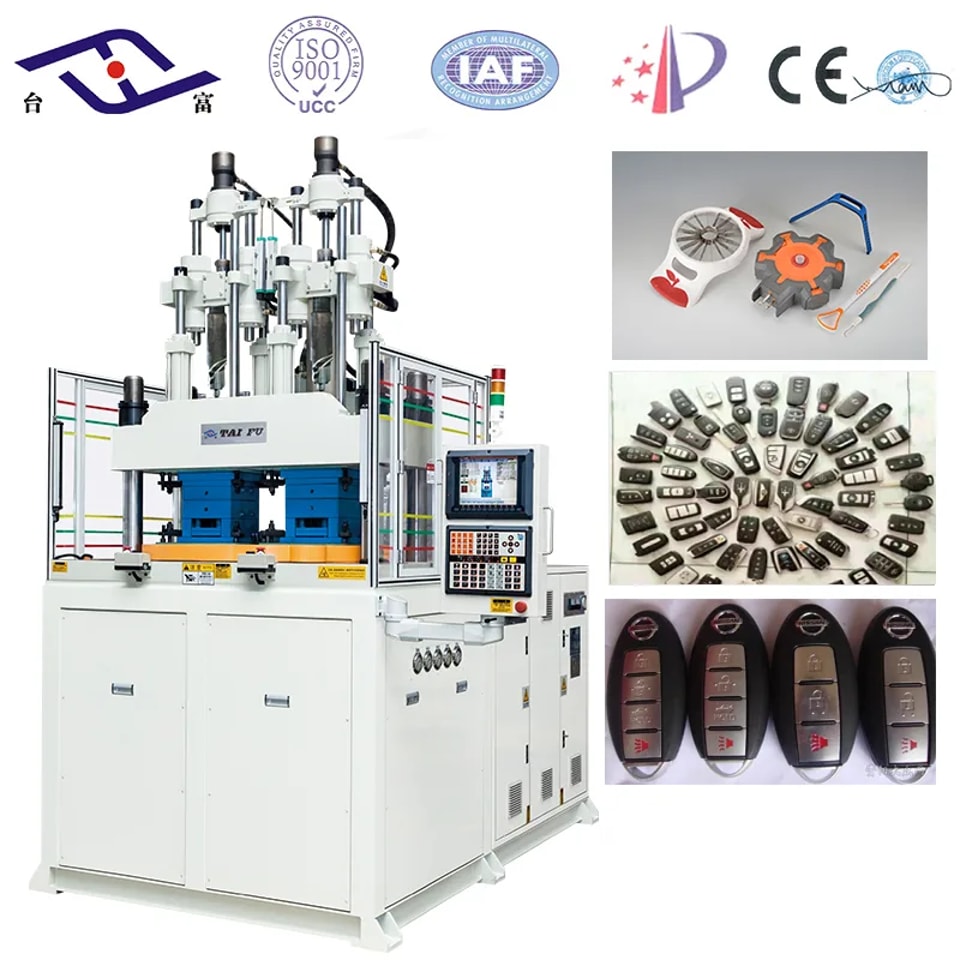
A two-color injection molding machine has two injection units (two barrels), usually each with its own dryer, and a mold with two moving halves and two fixed halves of essentially the same structure. It injects two different materials or colors into the same mold to produce one finished part. Both materials are molded on the same machine in two shots, but the part comes out of a single mold. The result is a part with two colors or two materials, improving both appearance and feel. Two-color molds are more complex than single-color molds and have their own design rules. Main types By structure, two-color molding systems can be divided into core-rotating, core-retracting and sliding-plate rotating types. Core rotation is currently the most widely used, in two forms: Split type: two separate molds on one machine rotate alternately to produce the two-color part. Integrated type: both shots are molded within a single mold set. Design tip To prevent the second-shot cavity from damaging the first-shot part, provide clearance in suitable areas and control the shut-off (sealing) force so the part does not deform under impact. Two-color molding is widely used for electronics, toys and medical products, and multi-color machines are developing quickly as well.
1. Screw material and temperature Temperature plays a small role; most screw failures come from screws with poor material toughness or screws that have simply worn out and need replacing. Control temperatures carefully. At start-up, always run screw decompression (suck-back) before injecting. Without decompression, the screw tip is still wrapped in material; purging or injecting directly can snap the screw tip or crack the check ring. 2. Abrasive materials Glass-filled (GF) materials are hard on screws and machines. They flow poorly and need high injection speed. If not handled well, they can crack the screw tip and check ring, or even break the screw into several pieces. 3. Back pressure Excessive back pressure increases the load on the screw during recovery and can also cause it to break. Prevention When running GF materials, if the machine is stopped for more than 3 minutes, purge the barrel before restarting. PP, which is relatively tacky, works well for cleaning the screw and preventing degraded material from coating the screw and tip. Purge at reduced screw speed so the material melts fully as it rotates. Whatever the material, when the machine is shut down, purge all remaining material from the barrel so it is ready for the next run.
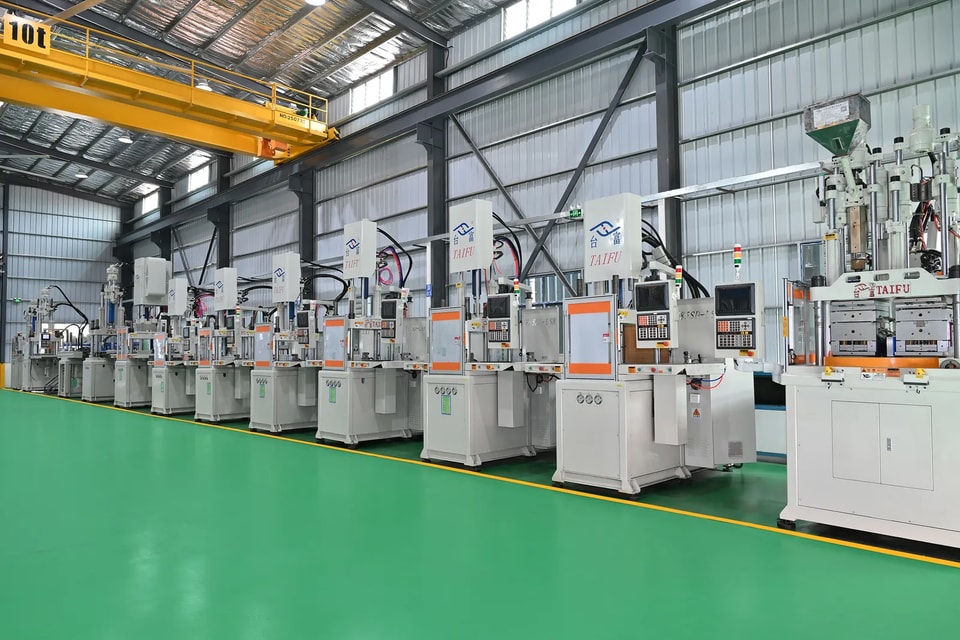
Injection molding machines are among the largest energy users in a molding plant, and most of that energy goes to the motor and the heating system. Here is where to start. Equipment Size the machine to the part — an oversized machine on a small part wastes a lot of energy. Choose a machine with a servo system, which can save 20–70%. Use newer heating technologies such as induction or infrared heating, which can cut heating energy by 20–70%. Insulate heating and cooling systems to reduce losses. Keep drive components well lubricated to avoid energy lost to friction and unstable running. Use low-compressibility hydraulic oil to reduce hydraulic losses. Use machines that support parallel movements, multi-cavity or multi-component molding — such as two-color rotary machines — for significant savings. Replace conventional fixed-pump hydraulic drives with energy-saving drive systems. Maintain heating and cooling lines regularly so scale and debris do not reduce their efficiency. Keep machines in good condition — an unstable process produces rejects and wastes energy. Make sure the equipment suits the product, for example by using a dedicated screw where required. Process Use the shortest cycle that still meets part requirements; high-speed machines suit small, thin parts. Unless there is a specific reason not to, follow the machine manufacturer's recommended process settings. Save stable machine and process settings for each part and mold to shorten setup time on the next changeover. Optimize the process to use lower clamping force and shorter cooling and holding times.
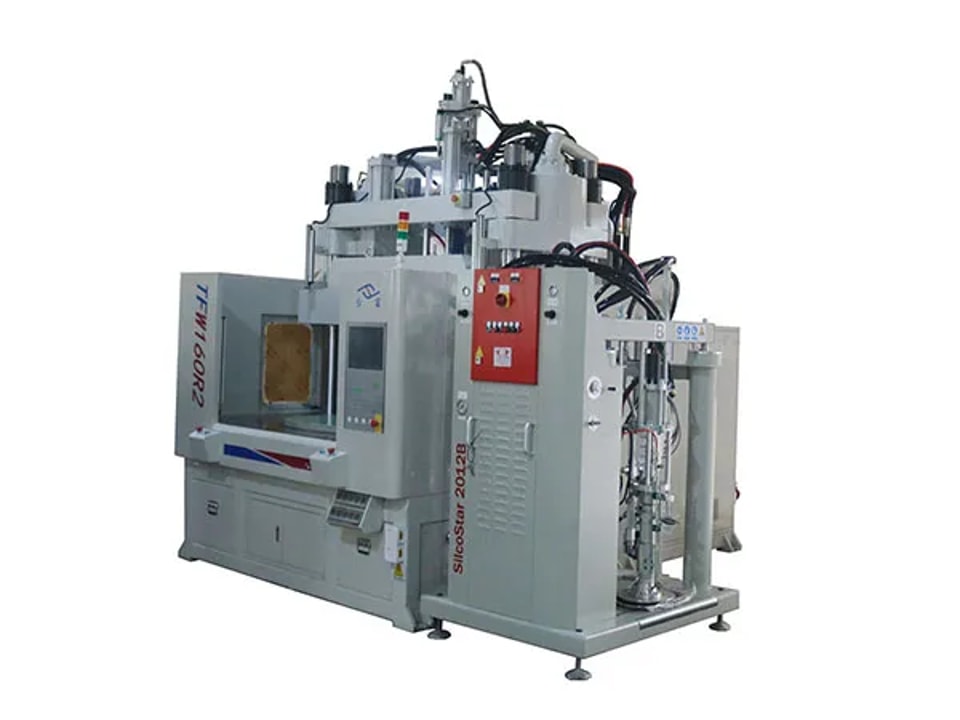
When a liquid silicone injection machine will not inject, check the following causes in order: Nozzle blocked by contamination. Check whether the nozzle is clear; clean or replace it. Distribution nozzle blocked. Remove the flange and check the distribution nozzle for cracks; replace it if damaged. Injection directional valve stuck. Check for 24 V at the valve and a coil resistance of 15–20 Ω. If both are normal, the valve itself is blocked — clean or replace it. Broken injection piston rod. Loosen the piston rod lock nut and inspect the rod; replace it if broken. Barrel temperature too low. Check whether the actual temperature reaches what the material requires, and readjust. Damaged injection piston seal. Inspect the seal and replace it if worn.
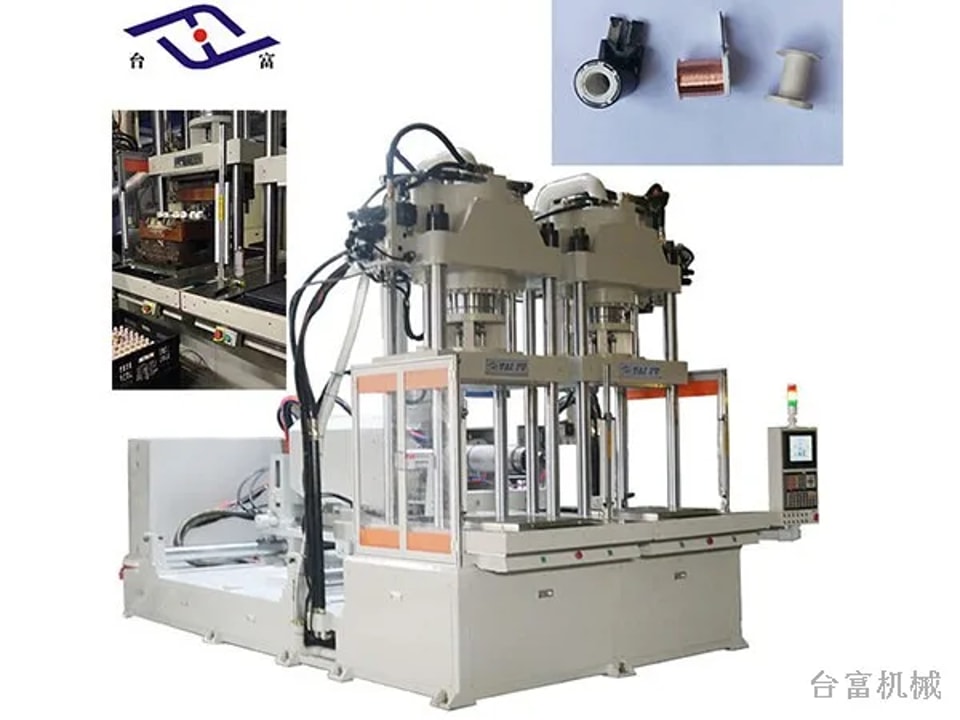
What is BMC? BMC (also called DMC), or bulk molding compound, is an unsaturated polyester dough-like premix made from chopped glass fiber (GF), unsaturated polyester resin (UP), mineral filler (MD) and various additives. It offers excellent electrical and mechanical properties, heat resistance and chemical resistance, and suits a range of molding processes. Compression press vs. automatic-feed injection BMC parts are usually made either on a hydraulic compression press or on an automatic-feed BMC injection machine. On a press, material is weighed and loaded by hand for every shot — dirty, tiring, hot work, and BMC causes skin irritation on contact. An automatic-feed BMC injection machine is particularly suited to BMC parts with inserts or parts requiring high hardness. Its hopper takes 15 kg of material at a time and the machine doses each shot automatically according to the controller settings, so it can run continuously like a standard injection machine — typically needing only two or three refills a day. Advantages Automation replaces manual weighing and loading, greatly increasing productivity. Lower material and labor costs, with better quality and yield. The injection system can be matched to the strength required: automatic-feed plunger type, automatic-feed screw type, or screw-plunger compound type — reducing glass-fiber breakage to maintain part strength. A cleaner, less physically demanding job helps manufacturers attract and keep workers.
Bakelite is phenol-formaldehyde resin (PF), one of the earliest industrial plastics. It is made from phenols and aldehydes — usually phenol and formaldehyde — by polycondensation with acid or alkaline catalysts. Thermoplastic and thermoset PF Depending on the catalyst, two types of PF are produced: thermoplastic PF, which needs a curing agent plus heat to form a cross-linked structure, and thermoset PF, which cross-links with heat alone. Either way, PF is only usable once cured into a cross-linked network. Curing is an irreversible physical and chemical process — quite different from the melting and solidifying of thermoplastics. Molding PF by injection Injection-grade PF needs good flow, the ability to mold at relatively low pressure, high hot rigidity, fast curing, good surface gloss, easy release and no mold contamination. Limitations include restrictions from filler type, difficulty with parts carrying many inserts, and the fact that cured sprues and runners cannot be recycled. The practical difference Thermoplastic PF can be molded on a standard injection machine with strict process control. Thermoset PF requires a dedicated PF machine — with a barrel and screw different from a standard machine — and molds of a specific design. Taifu builds vertical bakelite machines, BMC machines and standard plastic injection machines. Bakelite and BMC parts are widely used in cookware, electromechanical products and household appliance components.
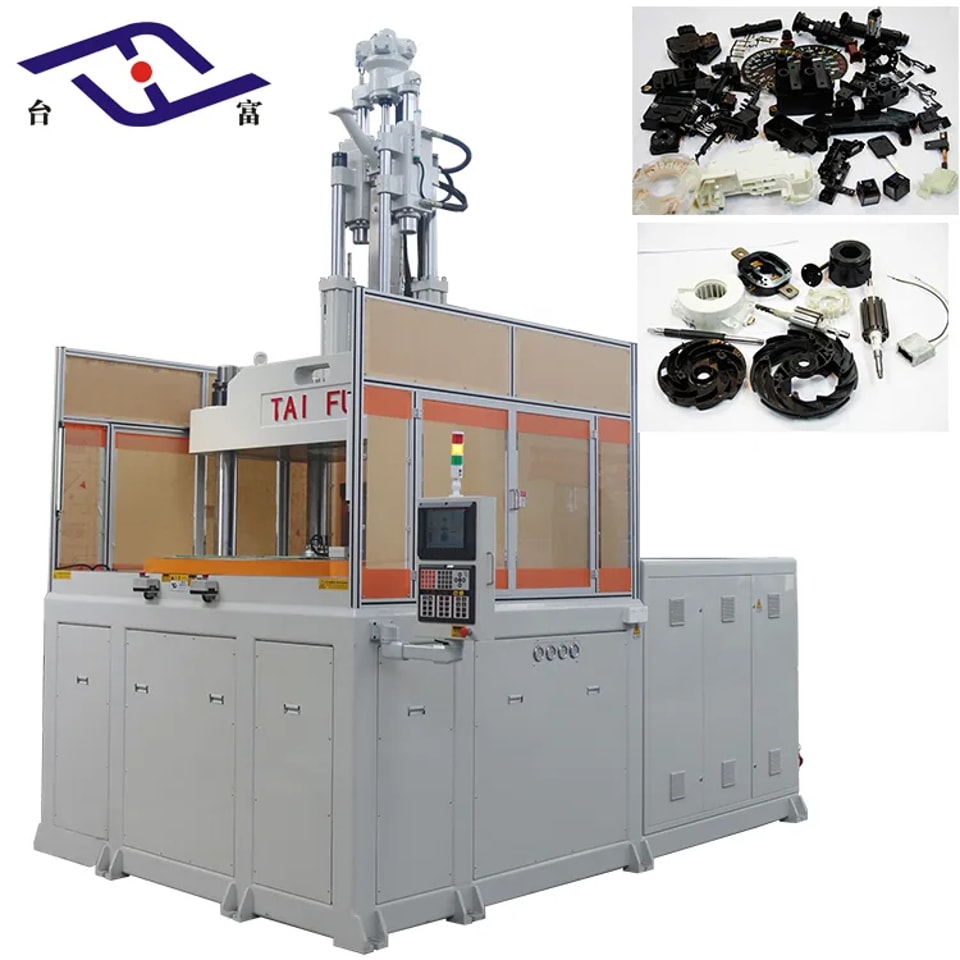
The materials most often used for automotive parts on vertical injection molding machines are PA66+30% GF, PA66, PBT, PP and POM. PA66+30% GF Urea (DEF) tank components, for example, are mainly molded in PA66+30% GF. PA66 stands out in the polyamide family for its high melting point; as a semi-crystalline material it keeps high strength and stiffness even at elevated temperatures. Nylon continues to absorb moisture after molding, and the amount depends on wall thickness and service conditions. When designing precision parts, account for the effect of moisture absorption. Because of the limitations of neat resin, fillers or additives are usually added to improve mechanical properties — most commonly glass-fiber reinforcement, which is why PA66+30% GF is so widely used for automotive parts. Typical parts Vertical machines mold a wide range of automotive and related parts, including fuse box housings, gears, watch cases, scanner housings and Bluetooth accessory housings.
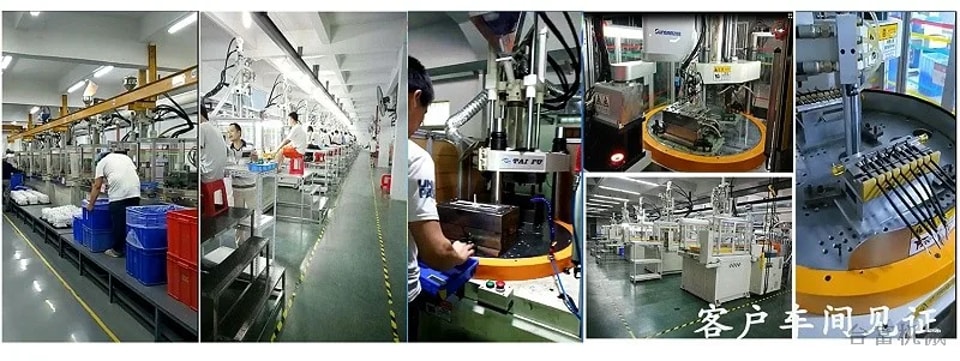
Almost every LCD uses a plastic light guide plate, usually made from highly transparent PMMA or PC. Machines from 55 to 300 tons are used: hydraulic machines for low- to mid-range products, vertical or hybrid electro-hydraulic machines for mid- to high-end products, and all-electric or injection-compression machines for the highest grade. Light guide plates are high-precision optical parts. The printed dot pattern must be complete, the part must not shrink or warp, and the surface must be free of black or yellow specks, gels and contamination, with good overall finish and light transmission. Process requirements (mobile phone light guide plate example) A 120-ton rotary vertical machine can be used. Clamping force must be sufficient and platen parallelism high to prevent flash and keep thickness uniform. Injection must be stable and metering accurate. Shot capacity should not be oversized — too large a shot can yellow the melt. Plasticizing components need a high surface finish to prevent yellowing and black or yellow specks. High injection pressure and speed are required, as PMMA and PC melts flow poorly, especially in thin-wall plates. Because of the high melt viscosity, the screw needs high torque and a design that resists torsional breakage. The mold must fill and release smoothly, be machined to high accuracy and have precise vents. Taifu has supplied 120-ton rotary vertical machines to Fujian a phone-component manufacturer, delivering several hundred rotary machines.
Request a machine proposal
Enquiry about

© 2026 Dongguan Taifu Machinery Co., Ltd.