
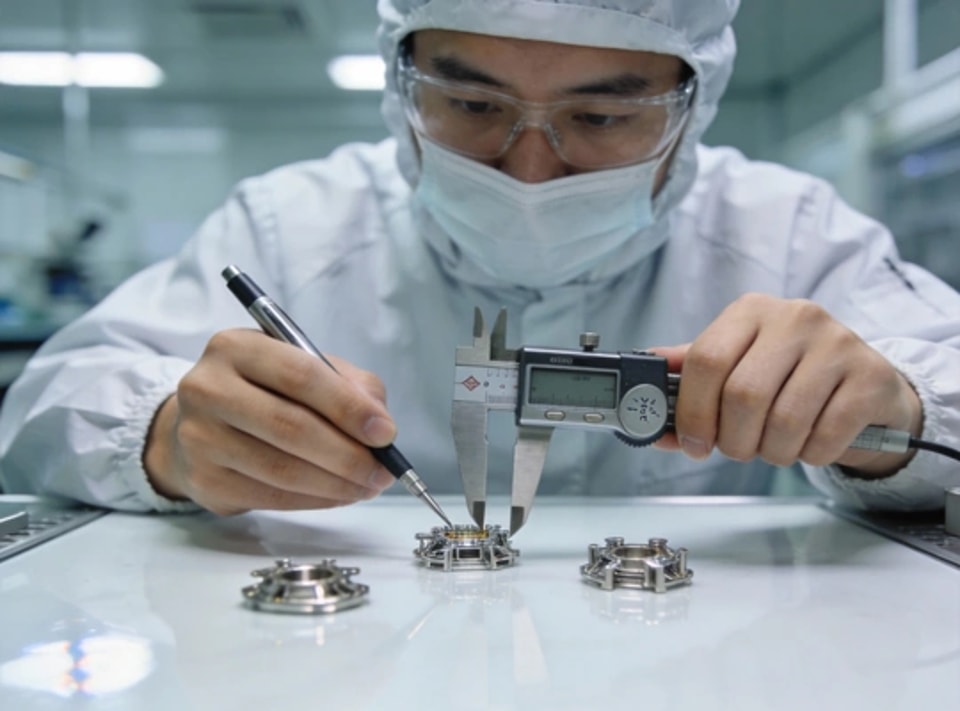
Molding LCP on Vertical Machines: Machine and Mold Guidelines
Machine requirements for LCP
- Screw made from highly wear-resistant material
- Screw tip with an anti-backflow (check) structure
- Precise temperature control system
- Specially designed nozzle
- Responsive feeding and injection systems
- Barrel capacity matched to part weight — neither too large nor too small
Mold guidelines
- Mold design is critical. Use a standard open (cold) gate rather than a hot nozzle; hot nozzles tend to overheat LCP and cause blistering.
- Mold temperature is typically around 140 °C. Keep the upper (fixed) half hotter than the lower (moving) half: the hotter fixed half keeps the melt flowing and avoids cold slugs, while the cooler moving half helps the part crystallize. Keep the difference within 15 °C.
- Choose a lower mold temperature to shorten the cycle and prevent flash; choose a higher one when dimensional stability is critical or to reduce weld lines and short shots.
Pressure and speed
The right pressure depends on the material, part geometry, mold design (especially sprue, runners and gates) and other conditions. All LCP grades have very low melt viscosity, so pressures are lower than for typical thermoplastics. Start with low pressure and increase gradually; most parts mold at 15–45 MPa. LCP solidifies quickly, so high injection speed generally gives good results.
Cycle time
Thanks to LCP's good flow and fast solidification, fill times and cycles are short — typically 10–30 seconds, depending on part size, shape, wall thickness, mold and conditions.
Contact & RFQ
Have a part in mind?
Send us the drawing, insert and material. Our engineers reply with a machine proposal.
Request a machine proposal
Enquiry about

© 2026 Dongguan Taifu Machinery Co., Ltd.