
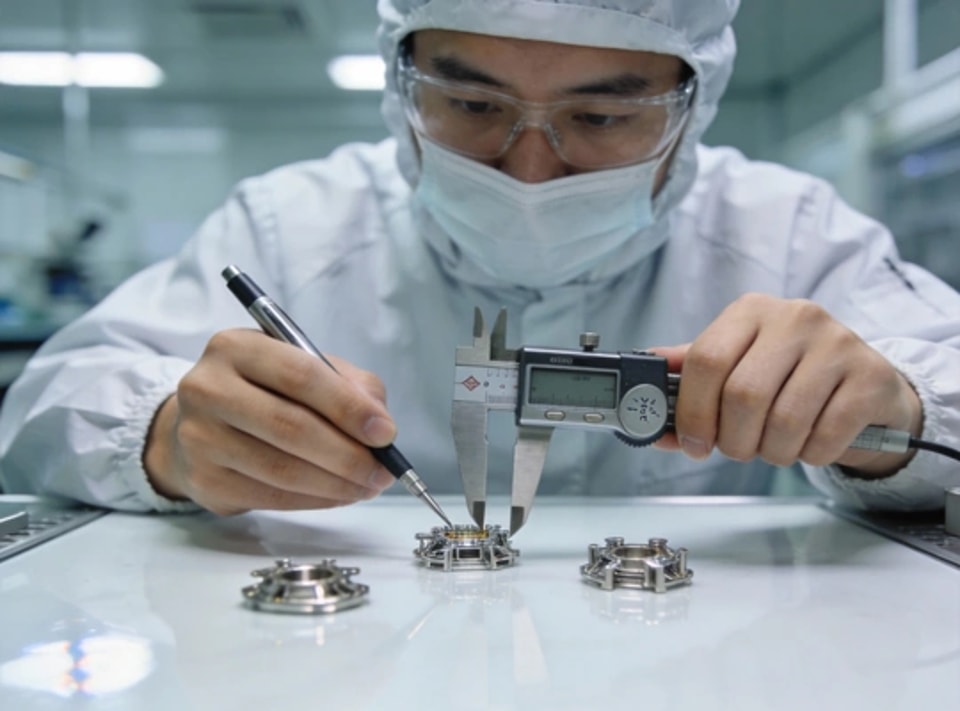
Process Settings for Bakelite Injection Molding
Plasticizing conditions
- Back pressure. High back pressure gives thorough, uniform plasticizing, but the heat can cause the melt to cure early and lose flow. Low back pressure leaves the material under-plasticized with poor flow. Set it according to the material and the wear condition of the screw and barrel.
- Screw speed. Too fast shortens plasticizing time and the material is not fully plasticized. Too slow increases friction, overheating the material so that it cures early, releases gas, impairs filling and accelerates screw and barrel wear.
- Material temperature. Too high and the melt cures rapidly under shear, increasing wear and blocking the nozzle. Too low and plasticizing is insufficient, injection is slow and the cavity does not fill. Generally keep material temperature at 70–90 °C; for PF-161J, 72–78 °C.
Filling conditions
- Injection speed. Too fast generates frictional heat that cures the melt locally or even burns it, trapping moisture and gas and causing pinholes or short shots. Too slow causes flow marks and visible weld lines.
- Injection pressure. Higher pressure gives good filling and mechanical properties but raises internal stress and thickens flash. Too low pressure causes short shots; repeated short shots can darken the mold release agent and leave the part surface dull and whitish.
- Hold time. Longer hold increases part weight and density but makes ejection harder; beyond about 25 seconds part weight no longer increases. Shorter hold shortens the cycle but increases shrinkage.
Curing conditions
- Mold temperature. Higher mold temperature shortens the cycle, but too high causes burning, pinholes and gas traps. Too low reduces flow at the melt front, causing incomplete filling, weak bonding, low strength and poor gloss.
- Curing time. Keep it as short as possible while holding dimensions within tolerance; thicker walls need longer curing. After ejection, parts can cool naturally.
Contact & RFQ
Have a part in mind?
Send us the drawing, insert and material. Our engineers reply with a machine proposal.
Request a machine proposal
Enquiry about

© 2026 Dongguan Taifu Machinery Co., Ltd.